

 DEUTSCH
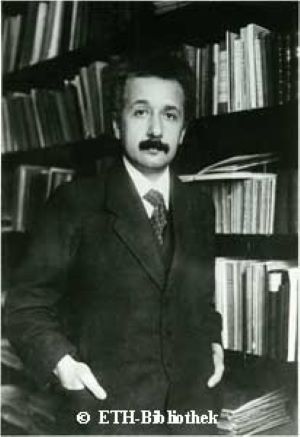
Einstein said: “The Berlin gentlemen speculate with me like with an award-winning laying hen, but I don’t know whether I am still able to lay eggs!”
From Erinnerungen eines Kommilitonen [Memories of a fellow student], Louis Kollros, December 1913
Albert Einstein‘s Residences in Berlin – 1914-1932
The physicist Max Planck and the physical chemist Walther Nernst travelled to Zurich in the middle of July 1913 to convince Einstein of Berlin. They offered him the membership in the Preußische Akademie der Wissenschaften [Prussian Academy of Sciences] connected with a professorship at the University of Berlin without teaching obligation, as well as the leadership of the still to be founded Kaiser-Wilhem Institut für Physik [Kaiser Wilhelm Institute for Physics]. On November 12, 1913 Einstein‘s election into the Academy by Kaiser Wilhelm II. was confirmed, and on December 07, 1913 Einstein accepted the offer of the “Berlin gentlemen”.
When Einstein arrived in Berlin on March 29, 1914 the city had approximately 2 million inhabitants.
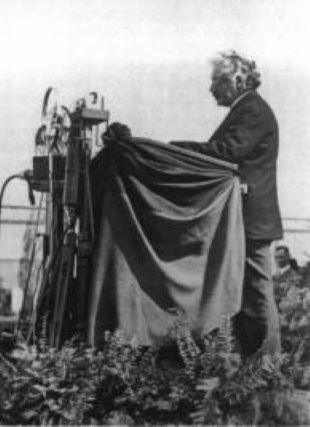
In the following, Einstein‘s residences in Berlin are listed in chronological order. Though Einstein‘s “Spandauer Schloss” [Spandau Castle] cannot be considered a residence, it is listed in the overview. Except for a few events, additional information is waived.
Overview of Einstein‘s residences in Berlin
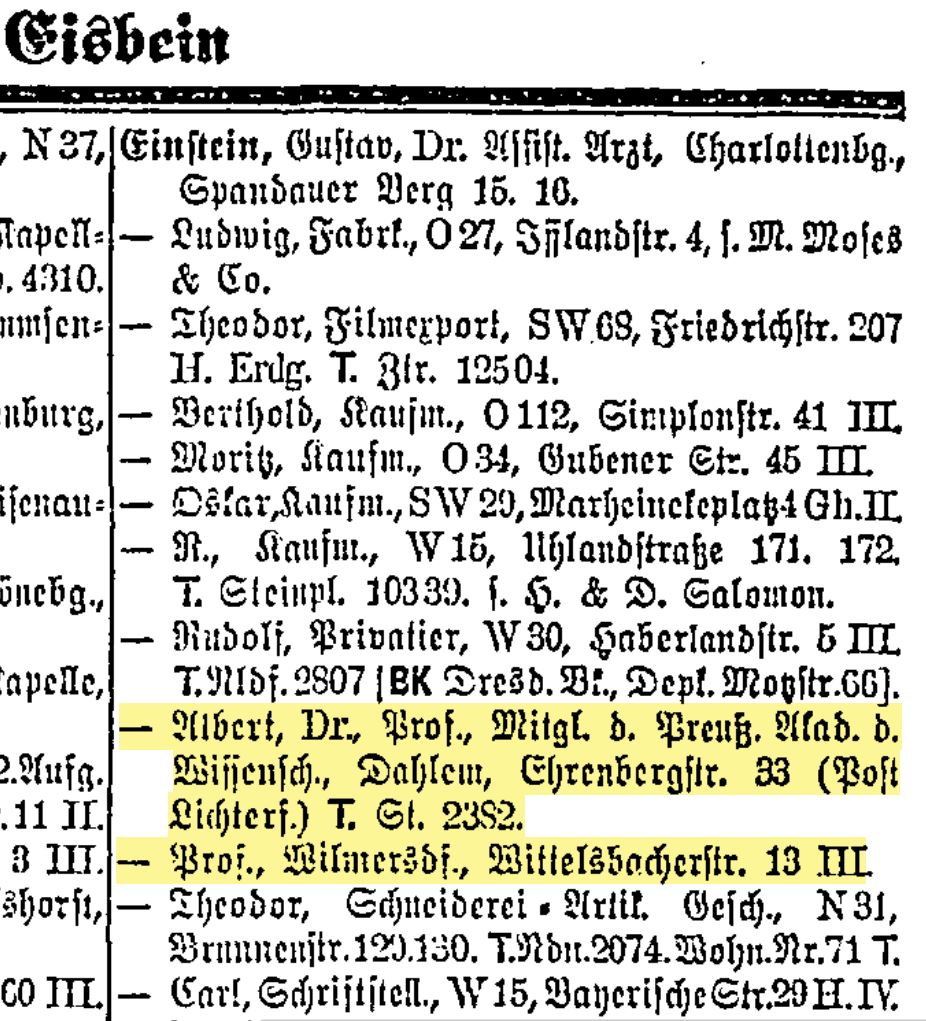
| Ehrenbergstraße 33 | from | April | 1914 | to | November | 1914 |
| Wittelsbacherstraße 13 | from | December | 1914 | to | August | 1917 |
| Haberlandstraße 5 | from | September | 1917 | to | December | 1932 |
| *) “Spandau Castle” | from | August | 1921 | to | September | 1923 |
| **) Summer house in Caputh | from | September | 1929 | to | December | 1932 |
*) The “Spandau Castle” was a retreat for Einstein, however, he only seldomly used it.
**) In his summer house in Caputh, Einstein and his wife Elsa only lived during the summer months.
Remark concerning the overview of Einstein‘s residences:
Today, after approximately 100 years, it is difficult and partly also no longer possible to indicate the exact data of the respective dates of moving in and out from the residences. Also the information in the relevant Einstein literature is incomplete, i.e. contradicting at these points. That is the reason why the overview only contains the respective month.
Ehrenbergstraße 33
Einstein‘s first residence in Berlin. Mileva Maric, Einstein‘s wife, and the befriended chemist Fritz Haber and his wife Clara began to look for a suitable apartment in Berlin at the end of December 1913. It was found in Ehrenbergstraße 33 in Berlin-Dahlem, a rural suburb of Berlin, in direct vicinity to the developing institutes of the Kaiser Wilhelm Society. Mileva rented the apartment as of April 1, 1914. Einstein, who had not seen the apartment until his arrival in Berlin, wrote on January 20, 1914 from Zurich in a letter to the astrophysicist Erwin Freundlich: “We already have an apartment, very close to Haber’s institute, and thus also not so far from you.”
The apartment was located in a corner building – Ehrenbergstraße/Rudeloffweg. The owner was the master painter Johann R. Nikleniewicz. It is not known on which floor Einstein’s apartment was located. However, it is known that the apartment had to be renovated before moving in. Einstein, who arrived in Berlin without his family on March 29, 1914 coming from Zurich, lived with his uncle Jakob Koch in Wilmersdorfer Straße 93 until the completion of the apartment. To his wife Mileva, who was in Locarno with her sons for recovery (resort in the south of Switzerland), he wrote in a letter on April 2, 1914: “The new landlord is very decent. He’s having everything renovated nicely. The furniture will come on Monday but must be stacked up provisionally in the dining room because the apartment repairs will take another one and a half weeks.”
A few days after his arrival in Berlin he registered his move from Zurich to Berlin with the Berlin registration office (April 6, 1914). On April 18, 1914, after the apartment was ready for moving in, also Mileva with her sons, the ten year old Hans Albert and the four year old Eduard, moved from Zurich to Berlin. As the marriage had already been broken at this point of time (Einstein had started an affair with his cousin Elsa Loewenthal in 1912), the joint stay in the apartment did not last long. The attempt to save the marriage had failed. Already in July 1914 Mileva left the joint apartment with her sons. They temporarily lived in the spacious official mansion of the Haber family in Hittorfstraße/corner Faradayweg, before they travelled back to Zurich on July 29, 1914. Alone in the large apartment, Einstein was drawn to his cousin Elsa. At the end of 1914 he moved his place of residence from Ehrenbergstraße 33 in Berlin-Dahlem to Wittelsbacherstraße 13 in Berlin-Wilmersdorf – not far away from Elsa‘s apartment.
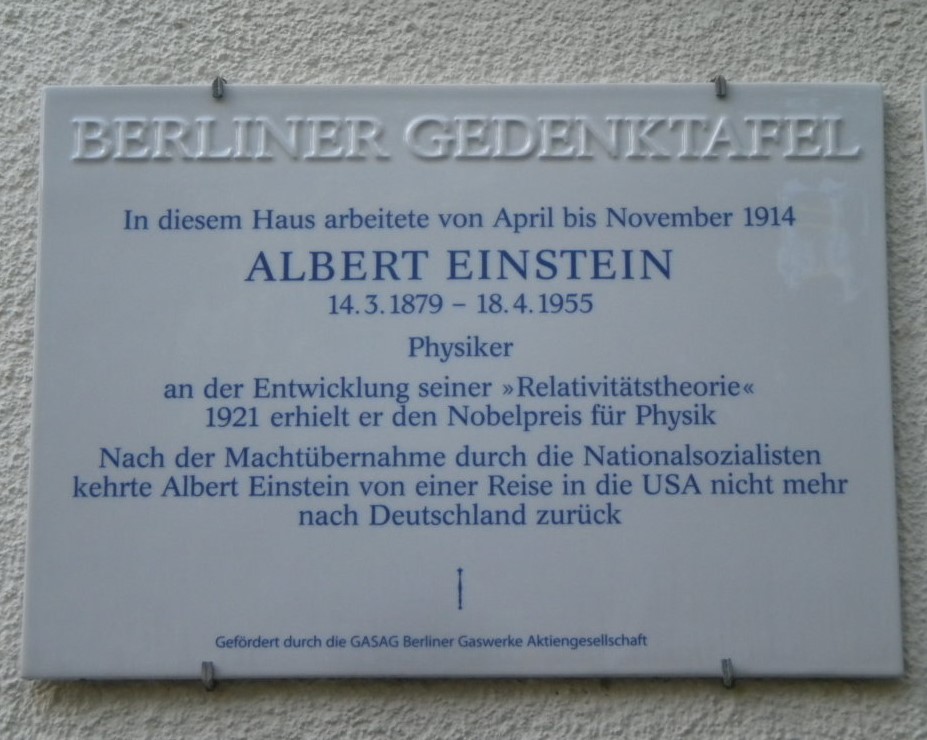
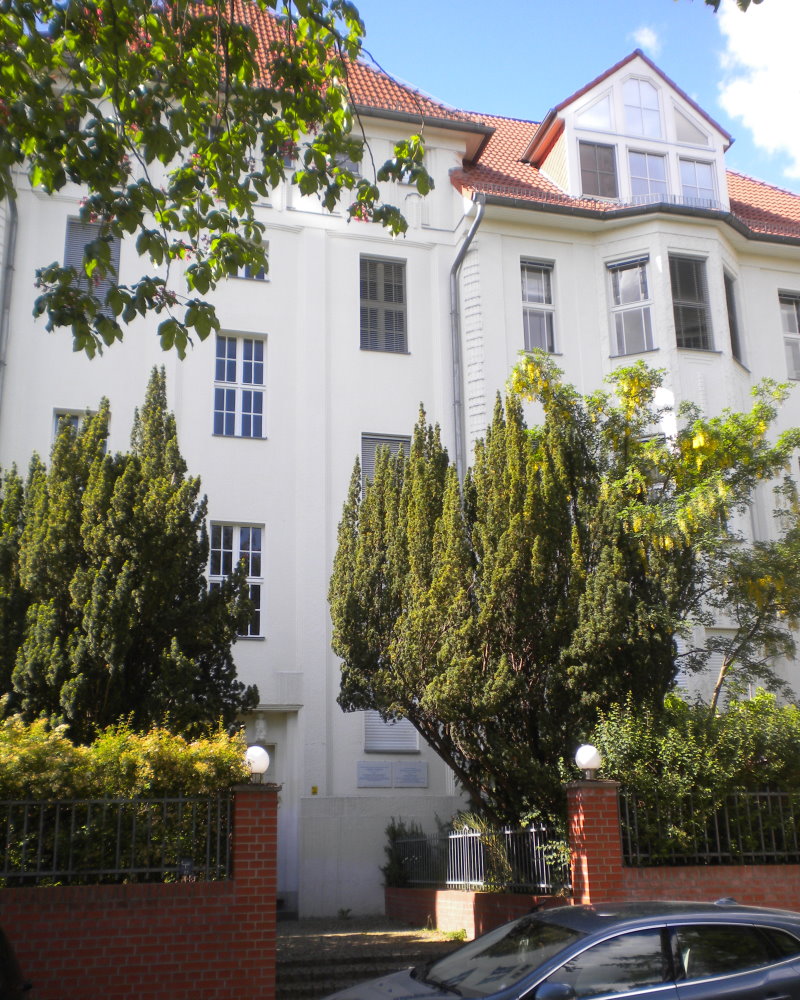
The house in Ehrenbergstraße 33, in which also the publisher Sebastian Haffner lived and worked, is today still the only preserved house in Berlin, in which Einstein had lived.
On July 2, 1914 Einstein held his welcome speech before the Prussian Academy of Sciences. On August 01, 1914, World War I broke out. Einstein began to intensively deal with politics. He became a member of the pacifistic Bund Neues Vaterland [Federation for the New Fatherland] and signed the “Manifest an die Europäer” [Manifesto to the Europeans] which had been written by Georg Nicolai.
Wittelsbacherstraße 13
As of December 1914 we find Einstein in the oldtown of Berlin in Wittelsbacherstraße 13 in the vicinity of Fehrbelliner Platz in Berlin-Wilmersdorf. There, he had rented a small three-room apartment *) on the third floor of an only recently built house. The owner of the house and thus the landlord was the architect Franz Abbé. In a letter to his son Hans Albert he wrote on January 25, 1915: “There I have a little flat in which I usually work all day. Sometimes I even cook my own lunch.”
*) On the third floor there was – according to the building plan – a three-room apartment as well as a seven-room apartment. Today it is not clear which apartment Einstein had rented, however, probably the smaller one. See the letter dated January 25, 1915 to his son Hans Albert.
The new apartment was only a good quarter of an hour by foot from Haberlandstraße, where his cousin Elsa lived with her daughters from the first marriage, Ilse and Margot. To a friend of the family, Heinrich Zangger, Einstein wrote in a letter on July 7, 1915: “I am living a very secluded and yet not lonely life, thanks to the loving care of my cousin, who had drawn me to Berlin in the first place, of course.”
The apartment had, as did the apartment in Ehrenbergstraße 33, a telephone connection. We don’t know much about the apartment itself, i.e. the social living conditions of Einstein in Wittelsbacherstraße 13. According to the information of a visitor, Einstein is said to have lived “in a quite empty apartment like a bachelor”.
On April 10, 1915 he wrote in a letter to Heinrich Zangger: “My human and professional contacts are few but very harmonious and rewarding, my public life withdrawn and simple. I must say that to me I seem one of the happiest of persons.”
This seclusion led to the fact that Einstein was able to concentrate on his theoretical works, for example on the final work on his general theory of relativity.
At the beginning of 1917, Einstein was suffering from various diseases (among other things from a liver disease, from jaundice, as well as from an ulcer). His cousin Elsa lovingly took care of him during this time.
As Einstein had only taken little care of the move to Haberlandstraße 5, we do not know today when he terminated the contract for his apartment in Wittelsbacherstraße 13. An exact date of termination is not documented in the biographic sources.
The house in Wittelsbacherstraße 13 was completely destroyed during an air raid in World War II.
In November 1915, he completed the work at the general theory of relativity and presented it in four academy presentations to the Prussian Academy of Sciences.
The article The Basis of the General Relativity Theory was published on March 20, 1916 in the Annalen der Physik [Annals of Physics]. On May 5, 1916 he became the successor of Max Planck as President of Deutsche Physikalische Gesellschaft [German Physical Society]. In the same year he – among other things – dealt with the topic gravitational waves, and once again with the quantum theory.
Einstein wrote a paper on cosmology with the cosmological term which should guarantee a spatially limited universe. Einstein will later describe this cosmological term as the “biggest mistake” of his life.
Haberlandstraße 5
Einstein‘s cousin Elsa convinced Einstein to move out of the apartment in Wittelsbacherstraße 13. The reason for the move, which was organized by Elsa, was that she wanted to have her Albert near her, and that she could take better care of him. On September 03, 1917 Einstein, who was on his way back from a vacation trip to Switzerland, wrote to his friend Michele Besso: “My address is thus 5 Haberland St. The move seems to have already been completed.”
As of the beginning of September 1917 he temporarily lived on the fourth floor of a spacious apartment in Haberlandstraße 5 where also Elsa lived with her daughters Ilse and Margot.
On September 22, 1917 Einstein wrote to Michele Besso: “Dear Michele, now you have to visit me here soon. It is spacious and comfortable enough in the new apartment.”
The house in Haberlandstraße 5 was located in Berlin-Schöneberg, in “Bayerisches Viertel“ [Bavarian Quarter]. As Einstein was still married – he had to keep his reputation clean – he officially lived in a “separate” apartment directly next to Elsa‘s apartment.
One floor further down lived Rudolf and Fanny Einstein, the parents of Elsa, as well as the brother-in-law, and the sister of Einstein’s mother Pauline.
To Heinrich Zangger he wrote on December 01, 1917: “Healthwise, I am feeling very well. I have gained approximately 4 pounds since the summer, thanks to Elsa’s good care. She cooks everything for me herself, since this has proved to be necessary. This is possible because I live in the apartment next to hers (for the interim)”
Today, it cannot be determined anymore when Einstein gave up his “temporary” apartment; however, probably as of May 31, 1919.
On June 2, 1919 he married his cousin Elsa Loewenthal and then officially lived with her and Elsa’s daughters in “Elsa’s” apartment. Einstein had been divorced from Mileva a few months before, on February 14, 1919.
As of the end of December 1919, Einstein‘s seriously ill mother Pauline lived with her son in Haberlandstraße 5 until her death on February 20, 1920. To Heinrich Zangger he wrote on January 3, 1920: “My poor mother arrived here on Sunday […]. Now she is lying in my study and suffers terribly, physically and mentally.”
The 1907/1908 built house in Haberlandstraße 5 is a large corner building heading to Aschaffenburger Straße. The architect and builder was Otto Eisfelder who – together with Elise Pulsack – was the owner of the house. The house had two entrances, two staircases, as well as from 1911 also an elevator. A portier in the entrance area at Haberlandstraße was also available. For the staff there was a separate entrance in Aschaffenburgerstraße. In the following years, several structural changes were made at and in the house.
The Bavarian Quarter was a residential area of the Berlin middle class with a large share of Jewish people. This quarter was also called “Jewish Switzerland”. Einstein‘s neighbors during this time were among others the rabbi Leo Baeck, the theater criticist Alfred Kerr, the author Else Lasker- Schüler, the social psychologist Erich Fromm, the liberal social reformer in the German feminist movement Alice Salomon, as well as the chess world champion Emanuel Lasker.
While we only know little about the two previous residences, we do know a lot about the residence in Haberlandstraße 5, among other thinks thanks to the memories of Einstein‘s housekeeper, “the good Herta”, Herta Schiefelbein (after 1936 Herta Waldow). Here, we have a lot of information about the social living conditions of Einstein and his cousin, as of 1919 his second wife Elsa.
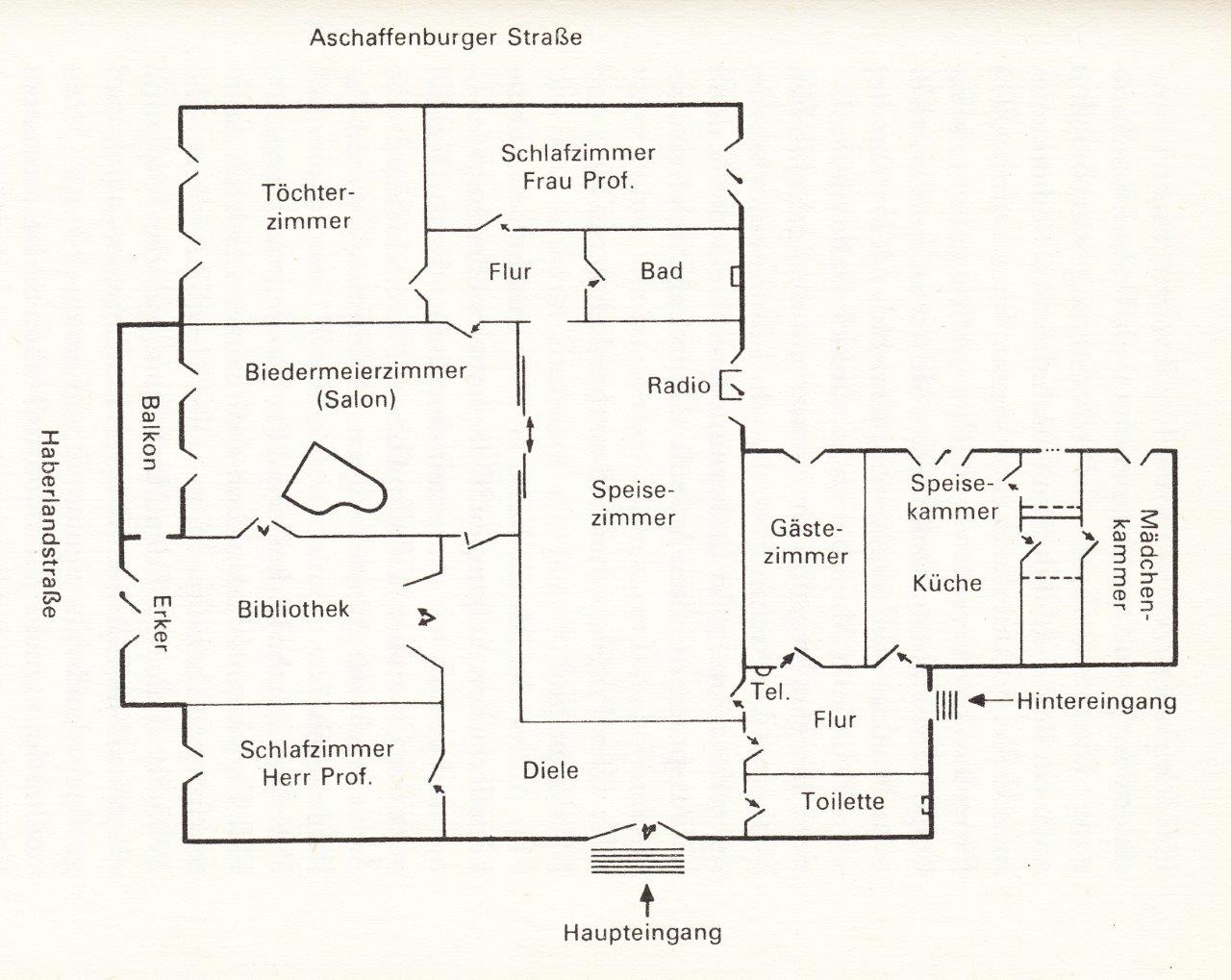
In literature, there are different floor plans of the apartment. The here shown floor plan corresponds quite exactly to the actual situation, except that the apartment was not located at Haberlandstraße but at Aschaffenburgerstraße.
The apartment had eight rooms plus a large hallway, kitchen, dresser, bathroom, and toilet. Furnished and equipped by Elsa in the style of the Wilhelmine middle class, it corresponded to the ideas of the educated and rich middle class. The windows were facing towards Aschaffenburgerstraße.
The apartment was accessible via two entrances: from the main entrance in Haberlandstraße via the stairs or the elevator, and from the side entrance in Aschaffenburgerstraße via the stairs. This had the following advantage for Einstein: When unpleasant guests were coming from Haberlandstraße, he was able to “flee” via Aschaffenburgerstraße.
As “the good Herta” reported, there regularly were tea afternoons, society evenings, as well as music evenings with friends or colleagues at Einstein’s apartment in Haberlandstraße 5. During the music evenings they played music together with the guests. The violin play was a great joy for Einstein, his “soul food”, and a compensation for his scientific work. For this, he often retreated in the “Turmzimmer” [Tower Room] in the attic of the house. Einstein also loved to play the piano. A grand piano was standing in the living room.
Einstein and Elsa received many famous persons of their time. Among their guests were for example Charlie Chaplin, Franz Kafka, Harry Graf Kessler, Leopold Koppel, Max Liebermann, Heinrich Mann, Lise Meitner, Carl von Ossietzky, Max Planck, Walther Nernst, Rabindranath Tagore, and Walter Rathenau.
In March 1922, the diplomat and politician Harry Graf Kessler wrote in his diary: “In the evening had dinner with Einsteins. Quiet, nice apartment in the west of Berlin (Haberlandstraße 5), a little bit too large and industrial dinner which this really loving, almost still childish appearing couple gave a certain naivety.“
In the apartment there was a telephone. The main connection (telephone) was located in the small hallway of the apartment. However, there were several extensions which could be set through respective switching at the main connection. Thus, Einstein had the possibility to also make calls in his “Tower Room”.
Description of the apartment by the housekeeper, “the good Herta”, Herta Schiefelbein:
Source: “Einstein at home”, Friedrich Herneck, New York 2016
“Viewed from the apartment entry, all the way in the back on the left side was the bedroom of Ilse and Margot […] Just in front of that room was the living room (Salon), the so-called Biedermeier room.”
“Next to the living room was the library, and adjoining the library was Herr Professor’s bedroom, right next to the apartment entry. On the right side, all the way in the back, was the bedroom of Frau Professor and, next to it, the bathroom. Then came the dining room, with a door leading to the Biedermeier room. Then came a little hallway that led to the guest room were visitors occasionally spent the night. But this did not happen often. […] Then came the kitchen on the right side, and next to it the pantry with a large refrigerator, which was cooled with large blocks of ice.”
“At the very front, right next to the entrance, was the toilet. I, myself, had a small room on the far-right side. The largest room of the apartment was the living room, where the grand piano stood and Herr Professor’s violin case usually sat on it. The piano did not really fit in with the Biedermeier decor, in my opinion, but it was there because it was the largest room in the apartment.”
“[Library] A narrow table, a few chairs, and a comfortable armchair. There was a desk at the window and, on it, a large globe. Upon entering, on the left, there was a glassed case with books inside, the only glassed-in bookcase in the apartment. Apart from that, I can only recall the shelves of books.”
“Yes. It [Radio] stood on the window sill in the dining room, at the window that looked out on the courtyard. […] Next to the large table in the center stood a smaller table where breakfast and supper were eaten. That was where the family ate every day.”
“How many people could the large table accommodate? If table leaves were inserted, twenty to twenty-four. When needed, we fetched the table leaves from the attic storage room and inserted them to expand the table. Chairs were brought in from the other rooms and additional ones from the attic.”
“The sideboard in the dining room filled the entire wall space, and all the furnishings were very solid.”
“Very simply. [Einstein’s bedroom] His bed stood against the library wall, with a night table beside it. There was also a wardrobe, a table, and a few chairs. […] The room was kept very plain.”
“[Telephone] The main connection was in the short passageway that led to the guest room and the kitchen. There were several secondary outlets that I could connect to, depending on whether the call was for Herr or Frau Professor. Herr Professor had two handsets, one downstairs on his night table and one upstairs on his desk next to the window [Turmzimmer].”
“The tower room [Turmzimmer] as we called it, consisted originally of two attic rooms, and during the construction the wall between them was partly removed. The room was wide, but not deep, and one wall was filled with books. […] Yes, you faced two windows as you entered the room. In one corner, the floor was raised slightly, and that is where Herr Professor always sat. His desk was there, and this is where he worked. Next to the desk was his telescope for observing the stars. It was a kind of school telescope mounted on a tripod and it stood in the corner, next to the window.”
“Tower Room” [Turmzimmer]
In the attic there was Einstein‘s working room. The room in the attic which was built for him in February/March 1922, known as “Tower Room”, had windows facing Haberlandstraße. In 1927, there was another reconstruction in the attic. The “Tower Room” which could only be reached via the stairs (the elevator ended on the 4th floor) had three rooms after the reconstruction: a storage room for books (approximately 12 m²), a small chamber (approximately 8.5 m²), as well as the actual working room (approximately 17.5 m²). In 1927, the building authorities became aware of the unapproved reconstruction. Structural and hygienic issues were criticized. It was for example missing a water connection and a toilet. After some discussions, the reconstruction was approved at the end of July 1927 with the note: “with consideration of the public interest in his research work”. When the responsible authorities made the decision, Einstein‘s large popularity and fame had surely contributed to this fact. He was allowed to continue to use his “Tower Room”.
In the working room, directly in front of one of the two windows, there was a desk with an arm chair in front of it, next to it a book shelf, an upholstered chair, another armchair, as well as a small table. According to the information of Rudolf Kayser, the husband of Einstein‘s stepdaughter Ilse, the walls were decorated with portraits of Maxwell, Faraday, and Schopenhauer. A small telescope on a tripod, directly next to the desk, as well as a telephone on the desk completed the furniture.
Einstein‘s working room which the family called “Tower Room”, was a retreat for him where he went for undisturbed working, thinking, and smoking. The room was also used by Einstein‘s secretary Helen Dukas (1928) and Einstein‘s “calculator” Walther Mayer. Here, he received visits of colleagues, such as for example by Max Planck and Fritz Haber. Also employees, students, and other visitors found their way into the “Tower Room”.
It also has to be noted that “in the rental contract for the apartment on the 4th floor in the attic, two further chambers were included which were in handwriting on the building plan for a reconstruction of the attic in 1922 described as “Prof. Einstein’s recreation room/office” and “book storage”.”
The goodbye
At the beginning of December 1932, Albert and Elsa Einstein travelled to the United States. Shortly thereafter, on January 30, 1933, the national socialists took over the power in Germany. Through the political power structures and the connected events in Nazi Germany, Einstein after that never ever entered German ground again.
In the spring of 1933, Einstein‘s apartment in Haberlandstraße 5 was searched by the SA several times. Ilse Einstein and Herta could – with the help of a forwarding company – ship the largest part of the furniture – including the piano, Einstein’s library, as well as his working materials – to Princeton, USA. Einstein‘s cash assets and securities were seized by the Gestapo.
The apartment in Haberlandstraße 5 was Einstein’s third and last residence in Berlin. The house in Haberlandstraße 5, because of the Jewish name giver 1938 renamed into Nördlinger Straße, and as of 1996 Haberlandstraße again, was completely destroyed during an air raid in World War II.
In memory of Albert Einstein, a transparent stele was revealed in Berlin Schöneberg, in Haberlandstraße 8 (previously number 5), on May 31, 2013. In addition to texts in German and English, the right side of the stele shows five pictures from Einstein‘s time in Haberlandstraße 5. Here, at this point, only the English text is reproduced:
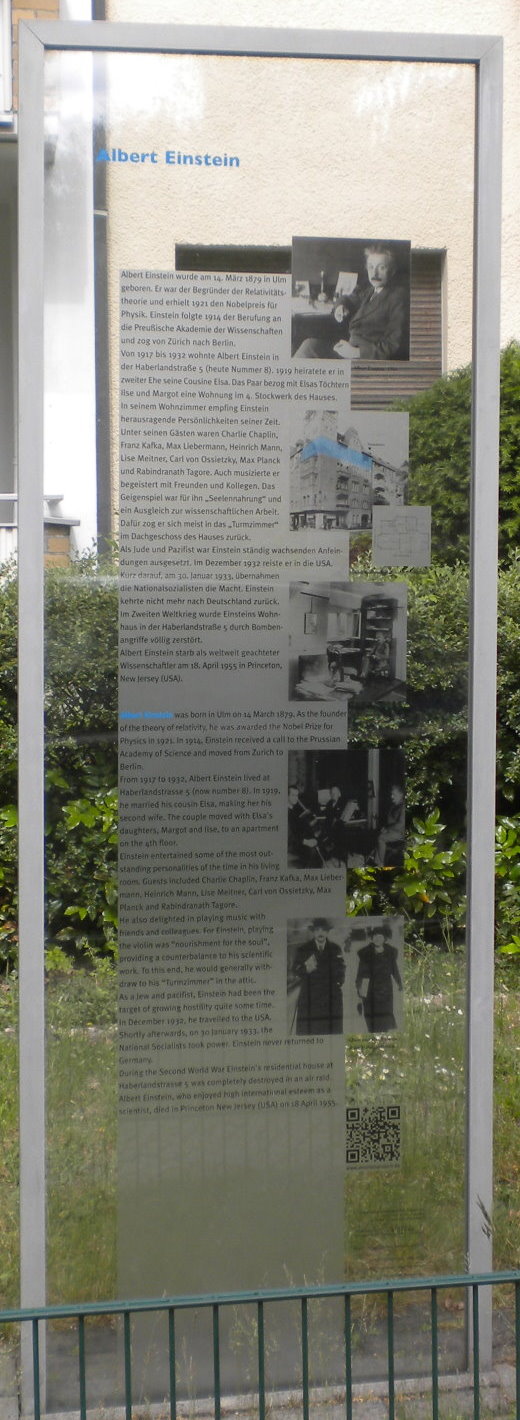
“Albert Einstein
Albert Einstein was born in Ulm on 14 March 1879.
As the founder of the theory of relativity, he was
awarded the Nobel Prize for Physics in 1921. In 1914,
Einstein received a call to the Prussian Academy of
Science and moved from Zurich to Berlin. From 1917
to 1932, Albert Einstein lived at Haberlandstrasse 5
(now number 8). In 1919, he married his cousin Elsa,
making her his second wife. The couple moved with
Elsa’s daughters, Margot and Ilse, to an apartment
on the 4th floor. Einstein entertained some of the most
out-standing personalities of the time in his living room.
Guests included Charlie Chaplin, Franz Kafka, Max
Liebermann, Heinrich Mann, Lise Meitner, Carl von
Ossietzky, Max Planck and Rabindranath Tagore.
He also delighted in playing music with friends and
colleagues. For Einstein, playing the violin was
”nourishment for the soul”, providing a counterbalance
to his scientific work. To this end, he would generally
withdraw to his ”Turmzimmer” in the attic. As a Jew
and pacifist Einstein had been the target of growing
hostility quite some time. In December 1932, he travelled
to the USA. Shortly afterwards, on 30 January 1933, the
National Socialists took power. Einstein never returned to
Germany. During the Second World War Einstein’s residential
house at Haberlandstrasse 5 was completely destroyed in an
air raid. Albert Einstein, who enjoyed high international
esteem as a scientist, died in Princeton New Jersey (USA)
on 18 April 1955.”
“Spandau Castle”
Detailed information on the following subsite of this website: “Spandau Castle”.
You can find it at: BIOGRAPHY > Germany > Berlin > “Spandau Castle”
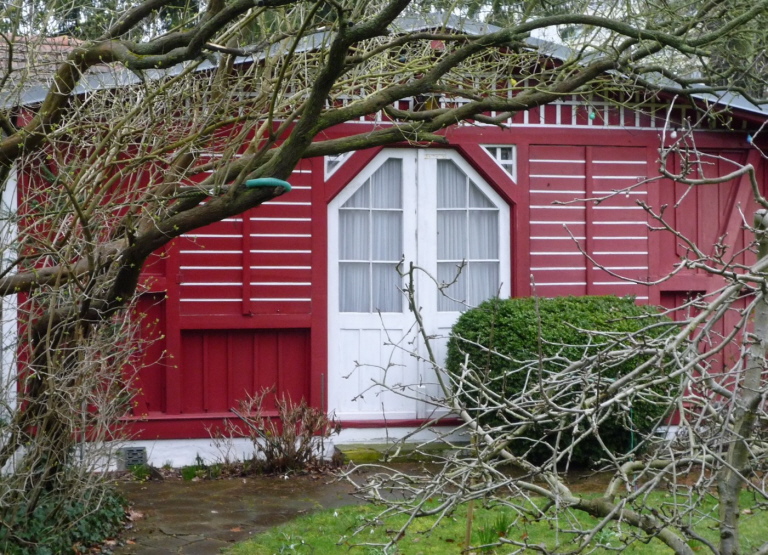
Summer house in Caputh
Detailed information on the following subsite of this website: Caputh.
You can find it at: BIOGRAPHY > Germany > Caputh
On October 1, 1917 Einstein took over the management of the Kaiser Wilhelm Institute for Physics.
On November 11, 1918 World War I was over.
Albert Einstein and Mileva Maric were divorced on February 14, 1919.
The solar eclipse which was observed by the astronomer Arthur Stanley Eddington on May 29, 1919 confirmed Einstein’s prediction of the light deflection in the gravitational field of the sun. Einstein became famous overnight.
On June 2, 1919, Albert Einstein married his cousin Elsa Loewenthal. She brought her two daughters from her first marriage, Ilse and Margot.
On November 09, 1922, Einstein was awarded the Nobel Prize for Physics for the year 1921. He did not receive the price for his theory of relativity, but for his discovery of the law of the photoelectrical effect.
On April 13, 1928 Helen Dukas started to work for Albert Einstein. At the beginning only his secretary, later after the death of Elsa Einstein also his housekeeper.
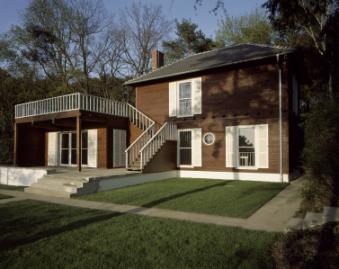
On March 14, 1929 Einstein celebrated his 50th birthday. In Caputh near Potsdam he had a wood house built in which he lived during the summer months until his emigration in December 1932.
In 1932 he accepted a call of the still to be founded Institute for Advanced Study in Princeton, New Jersey. At the beginning of December he once again travelled to the USA (CalTech, Pasadena). The return was planned for March 1933. However, through the political power situation and the connected events in Nazi Germany, he after that never ever entered German ground again.
11/26
Illustrations Credits:
Landesarchiv Berlin: 1
Wolfgang Volk, Berlin: 2, 3, 8
Berlin Address Book 1915 und 1920, Excerpt: 4, 7
Bildarchiv ETH-Bibliothek, Zurich: 5
From „Einstein privat“, Friedrich Herneck, 1978: 6
Christine Hüttner, Potsdam: 9
Einstein Forum, Potsdam – © Hans Bach, Potsdam: 10
Bibliography:
| Editor: Martin J. Klein, et al. | The Collected Papers of Albert Einstein, Volume 5 | Princeton 1993 |
| Anna Beck, Translator Don Howard, Consultant | The Collected Papers of Albert Einstein, Volume 5, English translation of selected texts | Princeton 1995 |
| Editor: Robert Schulmann, et al. | The Collected Papers of Albert Einstein, Volume 8, Part A and B | Princeton 1998 |
| Ann M. Hentschel, Translator Klaus Hentschel, Consultant | The Collected Papers of Albert Einstein, Volume 8, English translation of selected texts | Princeton 1998 |
| Editor: Diana Kormos Buchwald, et al. | The Collected Papers of Albert Einstein, Volume 9 | Princeton 2004 |
| Ann M. Hentschel, Translator Klaus Hentschel, Consultant | The Collected Papers of Albert Einstein, Volume 9, English translation of selected texts | Princeton 2004 |
| Dieter Hoffmann | Einsteins Berlin | Berlin 2018 |
| Adolf W. Meichle | Albert Einsteins Jahre in Berlin 1914-1932 | Bern 1997 |
| Hubert Goenner | Einstein in Berlin | Munich 2005 |
| Albrecht Fölsing | Albert Einstein – Eine Biographie | Frankf/Main 1993 |
| Friedrich Herneck | Einstein at home | New York 2016 |
| Michael Grüning | Ein Haus für Albert Einstein – Erinnerungen, Briefe, Dokumente | Berlin 1990 |
| Hrsg. Wolfgang Pfeiffer-Belli | Harry Graf Kessler Tagebücher | Wiesbaden 1996 |
| Wolf-Dieter Mechler | Einsteins Wohnungen in Berlin | Weinheim 2005 |
| Siegfried Grundmann | Einsteins Akte – 2. Auflage | Berlin 2004 |